


Beyond the Binary Misconception of Normal Aging vs Alzheimer’s
A common misconception is that memory loss is simply a black-and-white issue: it is either a normal part of getting older, or it is Alzheimer's disease. The reality of cognitive health is much more nuanced.
Determining the exact cause of cognitive decline is critical because different conditions require entirely different interventions, medications, and care plans. Dr. Perrin provides comprehensive differential diagnostics to identify exactly where a patient falls on the cognitive spectrum.
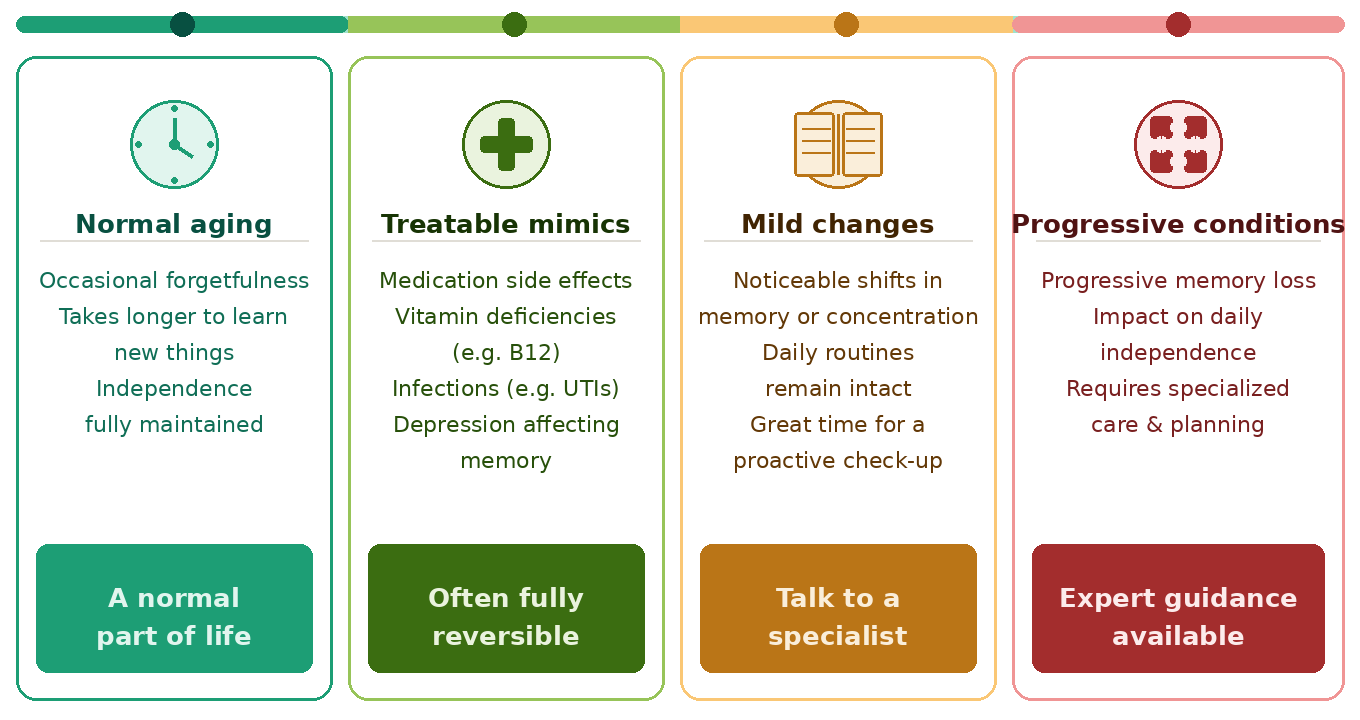
Normal Age-Related Changes It is normal to experience a slight slowing of processing speed or occasional "tip-of-the-tongue" word-finding difficulties as we age. These changes do not interfere with daily independence, finances, or safety.
Reversible & Acute Conditions Sometimes, severe cognitive impairment is entirely reversible. We help rule out acute medical issues that mimic dementia, including:
Medication Interactions
Metabolic & Nutritional Deficiencies
Infections
Pseudodementia (Severe depression)
Mild Cognitive Impairment (MCI) MCI represents a noticeable decline in memory or cognitive abilities that is greater than expected for a person's age, but not severe enough to interfere with daily life. Identifying MCI is a critical window for early intervention and monitoring.
Progressive Conditions "Dementia" is an umbrella term for several distinct conditions with distinct treatments. Our cognitive profiling helps differentiate between:
Alzheimer's Disease
Vascular Dementia
Lewy Body Dementia (LBD)
Frontotemporal Dementia (FTD)
Cognitive Assessment Services
-

Comprehensive Neuropsychological Evaluation
A full battery of standardized cognitive tests measuring memory, attention, language, and executive function. The resulting profile helps distinguish normal aging from mild cognitive impairment and specific dementia subtypes — giving patients and families the diagnostic clarity they need.
-

Diagnostic Clarification & Differential Assessment
A focused evaluation designed to identify conditions that can mimic dementia, including depression, medication side effects, and sleep disorders. Ideal when a specific diagnostic question needs answering quickly and precisely.
-

Longitudinal Cognitive Monitoring
A structured follow-up evaluation administered 12–24 months after an initial assessment, using the same standardized measures to track cognitive change over time. Comparing two timepoints is often the most powerful tool in confirming or ruling out a progressive condition.